Products Description
SOLEID Panels Types for Building Envelopes
There are generally four types of SOLEID panels used as part of building envelopes:
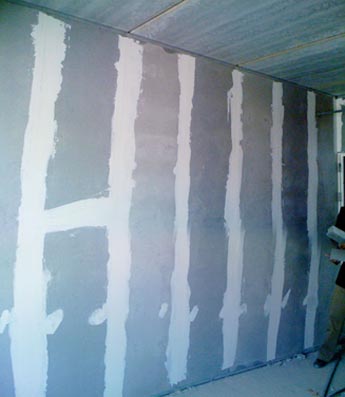
SOLEID cladding or curtain walls are the most common use for building façade envelopes. These types of panels do not transfer vertical loads but simply enclose the space. They are only designed to resist wind, seismic forces generated by their own weight, and forces required to transfer the weight of the panel to the support.
Load-bearing wall units resist and transfer loads from other elements and cannot be removed without affecting the strength or stability of the building. Typical load-bearing wall units include solid wall panels, and window wall and spandrel panels.
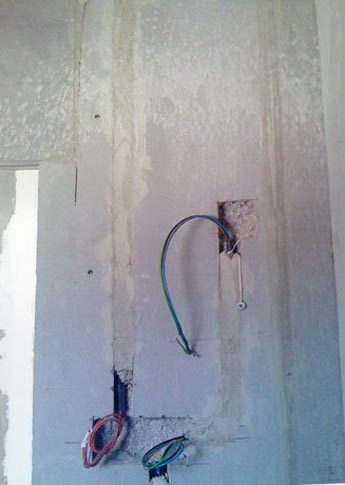
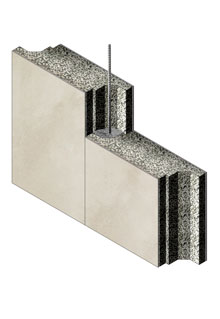
SOLEID shear wall panels are used to provide lateral load resisting system when combined with diaphragm action of the floor construction. The effectiveness of precast shear walls is largely dependent upon the panel-to-panel connections. The most common use of SOLEID shear wall panels are for internal partitions as non load-bearing walls.
In some cases, SOLEID panels are used as formwork for cast-in-place concrete. Those panels act as a form, providing the visible aesthetics of the system, while the cast-in-place portion provides the structural component of the system.
Support and Anchorage Systems
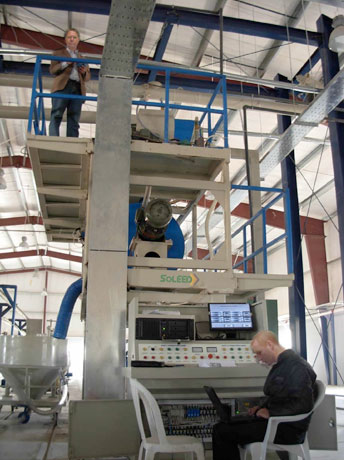
The connections for SOLEID panels are an important component of the envelope system. SOLEID installers utilize numerous different types of anchors but they are often characterized as gravity and lateral types of connections.
The primary purposes of the connection are to transfer load to the supporting structure and provide stability. The criteria used to design SOLEID connections including but not limited to:
Joints and Joint Treatments
The numerous joints in a SOLEID panels envelope are an important aspect of the facade design. The joints between precast units or between precast and other building components must be maintained to prevent leakage through the precast wall system. Joint design should consider the structural, thermal, and all other factors that affect the performance and movement of a joint. The joint seal should of course be adequately designed to withstand the movement of the joint.