Quality Control
Quality assurance (QA) - actions taken by the Qualified Person to provide assurance that what is being done and what is being provided are in accordance with the applicable standards of good practice for the work.
Quality control (QC) - actions taken by a producer or contractor to provide control over what is being done and what is being provided so that the applicable standards of good practice for the work are followed.
Comprehensive and timely QA/QC permit confidence in the use of advanced design procedures, frequently expedite construction, and improve quality in the finished product. Conversely, the results of poor QA/QC can be costly for all parties involved. QA/QC personnel must be experienced in their respective duties, including the batching, placing, curing, and testing of high-strength concrete panels.
QA/QC personnel will concentrate their efforts at the SOLEID plant to ensure consistently acceptable batching is achieved, as well as using proper sequencing of ingredients, especially when pozzolans or ground slag are used. Scales, flow meters, and dispensers will be checked monthly for accuracy, and will be calibrated every six months. Moisture meters will be checked daily. These checks and calibrations will be documented.
The QC or QA inspector will be present at the batching console during batching and will verify that the accepted types and amounts of materials are batched. Moisture content tests will be repeated after rain and the other tests will be repeated after deliveries of new batches of materials. Certain combinations of admixtures and Portland cements exhibit different strength development curves. Therefore, it is important for QA/QC personnel to watch for deviations in the type or brands of mix ingredients from those submitted and accepted. For load-bearing walls reference samples of cementitious materials will be taken at least once per day or per shipment in case tests are needed later to investigate low strengths or other deficiencies.
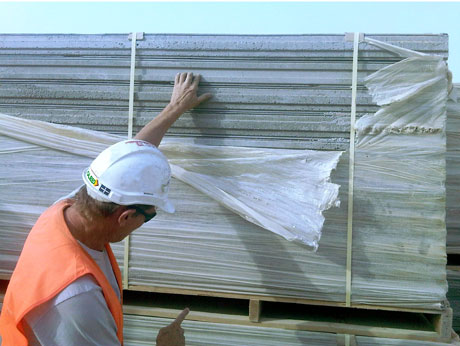
Therefore, appropriate curing methods for various structural elements should be selected in advance. QA/ QC personnel should verify that the accepted methods are properly employed in the work. The inspector should monitor and record ambient temperatures and temperatures at the surface and center of large concrete components so that the design/construction team can effectively make any adjustments, such as changes in mix proportions or the use of insulating forms, during the course of the production. Concrete delivered at temperatures exceeding specification limits should be rejected, unless alternative procedures have been agreed upon at the preconstruction meeting. The inspector should ensure that curing procedures are according to product specifications.